
Blog & Reflections
Creative reflections behind the Blueprint to Brushstrokes Videos & Business
Please scroll down to peruse the Posts they are listed in reverse chronological order (most recent at the top).
| April 2026 | May 2026 | June 2026 |
|
Blog Post 014 – “Why Creatives Burn Out – And How to Start Again” Companion Video: 014 Uploaded: Tuesday, April 7 Blog Post 015 – “You Can’t Recover From Burnout Without Changing Your Life (Honest Conversation) Companion Video: 015 Uploaded: Tuesday, April 14 Blog Post 016 – How Do We Stay Creative When Everything Changes? Companion Video: 016 Uploaded: Tuesday, April 21 ********* The Creative Non‑Negotiables: Re‑Designing a Creative Life After Burnout Mini Series Uploaded: Tuesday, April 28 – Sunday, May 3
Blog Post 017-1: Introduction & Frame: “You Can’t Recover Without Changing These Four Things” Uploaded: Tuesday, April 28
Blog Post 017-2: Time (NonNegotiable #1): “Why Creativity Requires a New Relationship with Time” Companion Video: 017-B Uploaded: Wednesday, April 29
Blog Post 017-3: Space (NonNegotiable #2): “Why Your Creativity Needs Safer Space to Return” Companion Video: 017-C Uploaded: Thursday, April 30
Blog Post 017-4: Patterns (NonNegotiable #3): “Why You Can’t Heal Without Changing the Patterns That Hurt You” Companion Video: 017-D Uploaded: Friday, May 1
Blog Post 017-5: Rest (NonNegotiable #4): “Why Rest Is Non‑Negotiable for Creative Recovery” Companion Video: 017-E Uploaded: Saturday, May 2
Blog Post 017-6: Integration: “How These Four Changes Work Together (and What Breaks Without Them)” Companion Video: 017-F Uploaded: Sunday, May 3 |
Blog Post 018 – How Sacred Places Help Creativity Return After Burnout Creative Anchor #1 · Burnout Recovery: Creative Anchors Series Companion Video: 018 Uploaded: Tuesday, May 5
Blog Post 019 – Why Rest Alone Doesn’t Heal Burnout (And Why It Keeps Failing Creatives) Creative Non‑Negotiables · Burnout Recovery Series Companion Video: 019Uploaded: Tuesday, May 12 Blog Post 020 – Burnout Recovery Requires an Identity Re‑Orientation – Why Better Habits Alone Aren’t Enough Creative Non‑Negotiables · Burnout Recovery Series Companion Video: 020 Uploaded: Tuesday, May 19 Blog Post 021 – Why Burnout Recovery Still Isn’t Sticking — Even When You Try Creative Non Negotiables · Burnout Recovery Series |
May 26, 2026
Creative Non Negotiables · Burnout Recovery Series: Re‑Designing a Creative Life After Burnout
This post continues the Creative Non Negotiables series — a six-part exploration of the structural conditions creativity needs in order to recover and remain sustainable after burnout.
In the previous post, we explored why burnout recovery often requires an identity re-orientation — and why changes in habits alone are not enough to prevent the return of familiar patterns.
This reflection builds directly from that foundation.
Because even when that insight begins to land, a second experience often follows:
You begin to make changes.
You become more aware.
You try to do things differently.
…and still, the changes don’t seem to hold.
This post explores why that happens — not as failure, but as something more structural, and potentially more useful, to understand.
Companion Video
This article accompanies the YouTube video:
“Why Burnout Recovery Still Isn’t Sticking”
part of the Creative Non Negotiables series on the Blueprint to Brushstrokes channel.
🎥 Watch here: 👉
The Moment Where Things Begin to Slip
There is a particular point in burnout recovery that can feel both confusing and discouraging.
You’ve made intentional changes:
And for a while… something shifts.
There is more steadiness.
More clarity.
More room to breathe.
But then life becomes full again. Deadlines return. Responsibilities expand. Pace increases.
And gradually — often without noticing at first —
something familiar begins to take over.
Not all at once. But steadily enough that, before long, you recognize where you are.
Back inside the same patterns you were trying to leave.
When the Question Turns Inward
This is often the point where the question changes.
From: “Why did this happen?”
To something more personal:
“Why can’t I maintain this?”
“Why does this keep slipping?”
“Why isn’t this working?”
And underneath that:
What am I missing?
What am I doing wrong?
This is where many people begin to turn the problem inward — toward discipline, effort, or consistency. But that interpretation, while understandable, is often incomplete.
What Is Actually Happening
Here is the part that can be difficult to see while you are inside it:
You are not failing to hold the change.
Your system is reverting to what it already knows how to run.
And it does this efficiently.
Not because you lack awareness. Not because you didn’t try. But because the deeper structure that shapes your decisions under pressure hasn’t yet shifted.
That structure includes:
So when pressure returns, the system reorganizes —
not according to your intention, but according to what it recognizes.
Reversion, Not Failure
This is an important distinction:
What feels like failure is often reversion.
You step outside of the pattern briefly. But under strain, your system pulls you back to the version of functioning it already understands. The version that prioritizes:
Even when that version comes at a great cost.
How the Shift Back Happens
The return to familiar patterns rarely happens through one large decision. It happens through small ones:
Each of these, on its own, may seem reasonable. But together, they begin to restore the same structure that previously led to burnout.
Why Recovery Doesn’t Stick (Yet)
In most cases, three elements are working together:
1. Identity Reactivates Under Pressure
When things become demanding, familiar roles return automatically. Not consciously — but reliably. The version of you that knows how to manage, carry, and deliver steps in.
2. Environment Remains Partially Unchanged
Even with internal awareness, the external conditions — expectations, timelines, culture — may still support the old patterns. And those conditions exert quiet, ongoing pressure.
3. Decision-Making Is Still Patterned
In small, almost invisible ways, decisions continue to follow familiar logic:
These decisions happen quickly, often without reflection.
But they shape the system.
A Different Way to Understand the Breakdown
When recovery doesn’t hold, the instinct is often to correct it. To try harder. To recommit. To improve consistency.
But there is another way to interpret that moment:
Not as something to fix. But as information.
Information about:
Because habits do not operate independently. They are supported — or undermined — by the structure they exist within.
The Structural Shift
This leads to a subtle but important reframe:
Recovery isn’t about trying harder to hold new habits. It’s about changing what holds those habits in place. This kind of change rarely happens all at once. It begins through:
This is not an efficiency-driven process. It is a relational one — between awareness, pattern, and choice.
✨ Creative Exercise: Noticing Reversion in Real Time
Purpose:
To gently observe how patterns return — without trying to correct them.
Choose:
Exercise:
While working, notice:
Reflection:
This is not about improving the work.
It is about observing the system.
✨ Deeper Reflection Questions
You don’t need to answer all of these. Choose what feels quietly relevant.
Patterns & Breakdown
Pressure & Response
System Awareness
A Note on Honest Noticing
You may notice a difference between:
The quieter answers — even when they are less comfortable — often offer more useful insight.
Not as something to act on immediately, but as something to understand more clearly.
Letting Insight Settle
It can be tempting, at this point, to turn insight into action quickly. To fix what you’ve noticed. To implement change right away. But not all clarity requires immediate response. Sometimes the most supportive next step is simply to:
Because when change happens too quickly, it can recreate the same system in a slightly different shape.
Closing Thoughts
Burnout recovery doesn’t fail because you’re not trying hard enough. It doesn’t “not stick” because you lack discipline. Often, it doesn’t hold because the structure underneath it is still configured in a way that returns to the familiar. And seeing that clearly is not a setback. It is a deeper level of understanding.
From there, the work becomes quieter. More gradual. More sustainable. Not about forcing change — but about allowing something different to take shape over time.
Until next time, may you notice where your system naturally returns under pressure — not with judgement, but with curiosity.
And from that awareness… begin to create space for a structure that can truly support you.
Jennet
Hashtags
#CreativeNonNegotiables #BurnoutRecovery #CreativeBurnout
#SustainableCreativity #MidCareerCreatives
#CreativeRenewal #BlueprintToBrushstrokes
Creative Non Negotiables Series
Burnout Recovery Series
May 19, 2026
Creative Non‑Negotiables · Burnout Recovery Series
The Creative Non‑Negotiables: Re‑Designing a Creative Life After Burnout
This post continues the Creative Non‑Negotiables series — a six‑part exploration of the structural conditions creativity needs in order to survive and recover after burnout.
In Blog Post 017 (and its companion video series), we examined non‑negotiables such as time, space, patterns, and rest — not as lifestyle preferences, but as requirements. Together, those reflections asked a difficult but necessary question:
What does creativity actually need in order to stay — not just return temporarily?
This post builds directly on that work. It focuses on one of the most common — and deeply frustrating — experiences I see among mid‑ to late‑career creatives recovering from burnout:
They rest. They slow down. They do “everything right.”
And recovery still doesn’t hold.
This reflection explores why that happens — and why rest, though essential, is rarely enough on its own.
Companion Video
This article accompanies the YouTube video:
“Why Burnout Keeps Coming Back (And What Actually Needs to Change)”
part of the Creative Non‑Negotiables series on the Blueprint to Brushstrokes channel.
🎥 Watch here: 👉
Burnout Recovery Requires an Identity Re‑Orientation
Why Better Habits Alone Aren’t Enough
If you’ve tried changing your habits after burnout – rested more, slowed down, protected your time – and still find yourself gradually rebuilding the same exhausting life…
there’s often a deeper layer at play.
Not something you’ve missed.
Not something you’ve failed at.
But something that hasn’t yet been clearly named.
Because for many people, burnout isn’t simply something that happens once and resolves. It returns in patterns.
You take a break.
You step back.
You promise yourself things will be different this time.
And for a while, they are.
But then, slowly, almost imperceptibly at first… the pressure returns, the old patterns re-emerge, and soon you find yourself back in a familiar place.
And that’s often the moment the question arises:
Why does this keep happening—even when I’m trying so hard to change it?
When Change Doesn’t Hold
Many thoughtful, capable creatives reach a point where they genuinely begin trying to recover.
They rest.
They step back.
They try to be gentler with themselves.
And for a while, that can help.
But over time, something familiar begins to return:
Not all at once, but gradually. Often so gradually it’s difficult to notice until you’re already partway back inside it.
And eventually the question becomes:
“Why does this keep happening, even when I know better?”
This is where habit-based explanations tend to fall short. Because this isn’t simply about behaviour. It’s about something more ingrained—something that continues to recreate the same conditions, even when you’re consciously trying to change them.
The Layer That Often Goes Unseen
Here is the deeper truth:
You don’t rebuild the same life because you failed to change your habits.
You rebuild it because the identity underneath those habits hasn’t shifted yet.
And identity isn’t something we consciously design. It forms over time—often quietly and invisibly—through:
For many creatives—especially mid– to late-career—this shaping has happened over years, sometimes decades. And from it, certain roles emerge. Roles like:
These roles are often deeply familiar. And they make sense. They were adaptive. They worked in the environments they were formed within. But they were rarely designed with sustainability in mind.
And so—even when you try to change your behaviour—the identity underneath quietly continues to recreate the same patterns.
Why Burnout Makes This Visible
Burnout has a way of revealing something that is usually hidden:
The version of you that learned how to succeed
is often the same version that learned how to overdo—and eventually exhausted you.
This realization can feel uncomfortable, even confronting. Because it’s personal. It challenges something that has likely been a source of competence, reliability, and even pride.
But it’s important to hold this with care: That version of you is not wrong.
In many ways, it did exactly what it needed to do:
The issue isn’t that this identity exists. The issue is that it continues to run the system in a context where it is no longer sustainable. And burnout often marks the point where that mismatch becomes impossible to ignore.
Why Habits Alone Don’t Solve This
When recovery is approached through habits alone, it tends to operate at the surface. You might:
And for a time, that can feel like progress.
But under pressure, something familiar happens:
And what often begins as “just this once” becomes: every time again.
Not because you don’t care. Not because you lack discipline. But because the same identity is still running the system. And that identity is highly effective at:
It knows how to restore the previous equilibrium—even if that equilibrium led to burnout.
This is why:
Rest without identity change often becomes recuperation for return—not true recovery.
You rest…
but then you return to the same system that exhausted you.
Recovery as Re-Orientation
This is why burnout recovery often requires something deeper than better habits. It asks for a quiet reorientation of identity.
Not a reinvention.
Not becoming someone entirely different.
But allowing older roles to loosen.
And gradually reconnecting with a more authentic, sustainable way of being.
You may begin to notice questions emerging like:
This process tends to be subtle.
It rarely responds well to urgency, pressure, or force.
But it is what allows recovery to shift from:
a pause before returning → a foundation that can actually hold
A Different Kind of Understanding
As this becomes clearer, something important begins to shift.
The question changes from:
“Why can’t I stick to this?”
to:
“What is still quietly shaping my choices?”
This shift matters. Because it moves you out of self-judgment and into awareness.
Out of trying to control and into understanding.
And that creates space for a different kind of change—
one that isn’t forced, but gradually emerges from seeing the system more clearly.
✨ Creative Exercise 1
Noticing Pattern, Not Perfection
Purpose:
To experience how identity and patterns show up in real time, without pressure.
Choose a subject that feels:
Examples:
Exercise:
While working, notice:
Reflection:
This isn’t about improving the drawing.
It’s about observing the system that shows up.
✨ Creative Exercise 2
Drawing From Memory: Reconnecting Safely
Purpose:
To reconnect creativity with familiarity and quiet ease.
Choose something that feels:
Examples:
Exercise:
Reflection:
This helps move creativity away from performance and back toward relationship.
✨ Deeper Reflection Questions
You don’t need to answer all of these.
Choose one or two that feel quietly important.
Identity & Roles
Patterns & Pressure
Recovery
A Note on Honest Answers
You may notice two kinds of responses:
If that happens, simply notice it. What feels slightly uncomfortable often holds the most useful information.
Letting Insight Settle
After this kind of reflection, it can feel like something should happen next.
A plan. A decision. A change.
But not all clarity needs immediate action. Sometimes the most supportive step is simply to allow the understanding to settle before trying to change anything. Because when change comes too quickly, it often rebuilds the same pattern in a new form.
Closing Thoughts
Burnout recovery isn’t about fixing yourself. It’s about designing a life—and a way of being—that can actually sustain you. And that kind of change doesn’t come from effort alone. It comes from seeing more clearly. And allowing what no longer fits to shift—quietly, over time.
You don’t need to rush this process. You don’t need to perform your way through it. You only need to stay in honest relationship with what you’re beginning to understand.
In upcoming posts and videos, we’ll continue to name the non-negotiables that make recovery more durable—gently, honestly, and without pressure.
Until next time, wishing you a grace‑filled day. May you notice which roles no longer need to work so hard, protect the parts of you that need care rather than proving, and allow your creative life to take its place within a structure that can truly support and sustain it.
Jennet
Hashtags
#CreativeNonNegotiables #BurnoutRecovery #CreativeBurnout
#SustainableCreativity #MidCareerCreatives
#CreativeRenewal #BlueprintToBrushstrokes
Creative Non‑Negotiables Series
Burnout Recovery Series
May 12, 2026
Creative Non‑Negotiables · Burnout Recovery Series
The Creative Non‑Negotiables: Re‑Designing a Creative Life After Burnout
This post continues the Creative Non‑Negotiables series — a six‑part exploration of the structural conditions creativity needs in order to survive and recover after burnout.
In Blog Post 017 (and its companion video series), we examined non‑negotiables such as time, space, patterns, and rest — not as lifestyle preferences, but as requirements. Together, those reflections asked a difficult but necessary question:
What does creativity actually need in order to stay — not just return temporarily?
This post builds directly on that work.
It focuses on one of the most common — and deeply frustrating — experiences I see among mid‑ to late‑career creatives recovering from burnout:
They rest. They slow down. They do “everything right.”
And recovery still doesn’t hold.
This reflection explores why that happens — and why rest, though essential, is rarely enough on its own.
Companion Video
This article accompanies the YouTube video:
“Why Rest Alone Doesn’t Heal Burnout (And Why It Keeps Failing Creatives)”
part of the Creative Non‑Negotiables series on the Blueprint to Brushstrokes channel.
Watch here:👉
When Rest Doesn’t Work, Something Deeper Is Being Asked
If you’ve taken time off.
If you’ve slowed down.
If you’ve tried resting, being gentler, doing less.
And you’re still exhausted — still fragile, still wary of starting again —
this conversation is for you.
Not because you did rest wrong.
But because rest alone cannot heal burnout, especially for thoughtful, responsible, creative people.
Many creatives come to burnout recovery carrying a quiet confusion: Why didn’t this fix it? What am I missing?
What I’ve learned — through my own recovery and through working with others — is that burnout isn’t simply about depletion.
Burnout is about the conditions your life keeps recreating.
When those conditions remain unchanged, rest becomes a pause between overload cycles rather than recovery.
Burnout Isn’t a Failure of Effort
It’s a Structural Problem
Most creative professionals who reach burnout have already done a great deal right.
They have:
And yet, recovery feels unstable — as if it could disappear at any moment.
That’s because burnout isn’t only an absence of energy.
It’s often the result of how energy, responsibility, and identity are structured over time.
If nothing meaningfully changes about:
then rest alone simply restores you enough to re‑enter the same system.
And the system asks the same thing of you again.
A Sketch Along — and a Small Story About Conditions
As I filmed the companion video for this post, I painted quietly alongside the conversation — not to demonstrate technique, but to stay grounded while thinking clearly.
The painting began with a small, imperfect sketch I made a few weeks earlier, on one of the first sunny spring days.
It was warm at home, and I was craving some vitamin sea, so we went for a walk at a nearby ocean beach. I brought my sketchbook, hoping to sit and do a bit of plein‑air sketching while we were there.
When we arrived, the wind was bitter and cutting. The kind that goes straight for your hands.
I managed only a few quick lines before our fingers froze. You’ll see a short clip my husband took just before we packed everything up and retreated to the car.
Later that day — warm again, settled at my kitchen table — I returned to that small sketch. Using memory and a quick reference photo, I finished the painting from a place of physical steadiness.
Nothing dramatic changed.
But the conditions did.
Creativity didn’t disappear when the outdoor setting became inhospitable.
It simply needed a structure that could hold it.
That small moment echoes a much larger truth:
Creativity adapts to the conditions it’s given.
It doesn’t survive force.
It survives support.
Why This Pattern Is So Common for Creatives
Creatives are especially vulnerable to what I think of as well‑rested burnout.
That’s because creativity doesn’t run on energy alone.
It also requires:
When creative practice is:
then even well‑rested creatives remain structurally exhausted.
This is why so many people say:
Creativity is sensitive. It notices whether it’s protected.
Rest Is Necessary — But It Is Not Sufficient
One of the central ideas of the Creative Non‑Negotiables series is this:
Rest matters. But rest alone does not heal burnout.
Rest restores capacity.
Structure determines whether that capacity is immediately lost again.
If your life continues to recreate the same pressures, expectations, and patterns, rest becomes a brief recovery window — not repair.
This leads to the hard, liberating truth:
You cannot recover from burnout using the same life structure that caused it.
Not with better self‑care.
Not with gentler habits.
Not even with more creativity layered on top.
Burnout resolves when the conditions that caused it are interrupted — and when creativity is structurally supported, not borrowed from what remains.
This isn’t about trying harder.
It’s about redesign.
Gentle Reflection Exercise: Mapping the Burnout Loop
This isn’t an exercise for fixing anything — only for noticing.
On a piece of paper, trace your most recent burnout cycle:
Then ask, softly:
What remained intact that might need to change?
This is not self‑critique.
It’s structural awareness.
Gentle Reflection Exercise: What Would Support Look Like?
Choose one creative activity that currently feels fragile.
Notice:
Now imagine — without committing yet — one small structural shift:
Ask:
What would it take for this to feel supported rather than squeezed?
Creativity doesn’t require perfect conditions.
But it does require belonging.
A Pause
You might pause here for a moment.
Notice where you’re sitting.
Feel your breath settle.
Nothing to solve.
Just noticing what wants your care next.
Closing Thoughts
If rest hasn’t helped the way you hoped, you’re not broken — and you’re not behind.
Burnout recovery isn’t easy and it is not about fixing yourself.
It’s about designing a life that can actually hold and support you.
Rest is part of recovery.
But it isn’t the whole structure.
In upcoming posts, I’ll continue exploring other non‑negotiables that make recovery sustainable — gently, honestly, and without pressure.
Until next time, wishing you a grace-filled day, and to trust in the changes that want to quietly emerge to support and nourish your creative spark.
Jennet
Hashtags
#CreativeNonNegotiables #BurnoutRecovery #CreativeBurnout
#SustainableCreativity #MidCareerCreatives
#CreativeRenewal #BlueprintToBrushstrokes
Creative Non‑Negotiables Series
Burnout Recovery Series
May 5, 2026
Burnout Recovery: Creative Anchors Series
Creative Anchors: Finding Continuity When Life Keeps Changing
This post is the first deep-dive in a new series exploring what I call Creative Anchors — the places, practices, and rhythms that help creativity return again and again, even when life becomes full, unstable, or emotionally demanding. I first introduced this idea in my Blog Post 016 (& companion video): How Do We Stay Creative When Everything Changes? Posted on Tuesday, April 21
If the Creative Non‑Negotiables series examined the structural conditions that allow creativity to survive after burnout, this series shifts the lens slightly. Here, we explore continuity — how creativity stays connected to us across long seasons of change, rather than disappearing and requiring recovery over and over again.
These reflections are not about productivity, momentum, or “getting back on track.” They are about return — returning earlier, more gently, and with less force.
Each post in this series can stand on its own. But together, they form a quiet map: a way back to creativity that costs less.
Companion Video
This article accompanies the YouTube video:
“How Sacred Places Help Creativity Return After Burnout | Creative Anchor #1”
available on the Blueprint to Brushstrokes channel.
You can watch it here: 👉
When Creativity Retreats, It’s Often About Safety — Not Motivation
When life feels unstable — or simply very full — creativity often doesn’t disappear. More often, it retreats from places — internal or external — that no longer feel safe enough to hold it.
Many creatives interpret this retreat as failure, disconnection, or loss of discipline. But over time — and through several burnouts — I’ve learned to see it differently.
Creativity is sensitive to conditions. When pressure, urgency, emotional load, or constant transition dominate our days, creativity doesn’t fight to survive. It waits.
One of the ways it waits is by withdrawing from places that feel unsafe — environments where it is rushed, scrutinized, or asked to perform before it has permission to exist.
This is where creative anchors matter.
What Is a Creative Anchor?
Creative anchors are forms of continuity. They are the places, practices, or rhythms that allow us to ground, calm, and make space and safety for creativity to emerge — even when everything else changes.
Some anchors are portable: a sketchbook, a repeated subject, a ritual, a daily walk.
Others are relational or temporal.
And some, for certain creatives, are deeply connected to place.
Creative Sacred or Familiar Places are not considered “sacred” because they are impressive or ideal. Here I am using the term “sacred” in a broader sense of being “a place set aside for a particular purpose” and that is “regarded with great respect and reverence” in the same manner that traditionally religious spaces are considered sacred.
Creative Sacred or Familiar Places hold a deeply personal sense of:
Even thinking of them allows the body to soften.
This post — and its companion video — explore one embodied example of place as a creative anchor. Not as a prescription, but as a lived case study.
Nitobe: Continuity, Not Nostalgia
For me, one of my Sacred Places that has quietly held and supported my creative life across decades is Nitobe Memorial Garden in Vancouver, BC.
I’ve returned to it through many seasons: as a child, a university student, an architect, an artist, a tired person, and a recovering one.
What makes Nitobe sacred isn’t nostalgia or beauty alone. It’s familiarity. It’s a place I know in my heart and my nervous system.
I know the paths. The lanterns. The sound of water. The way cedar and fir scent the air. The graceful koi swimming in the pond.
Even imagining myself passing through the garden gate, and my system relaxes — almost immediately.
And when the system relaxes, creativity no longer has to prove itself.
During some of my hardest seasons — including my deepest burnout — Nitobe was one of the first places my mind returned to. Not as escape, but as refuge. Some of the earliest marks I made while recovering creatively were sketches drawn from memory — before I was able to return physically.
Nothing needed to happen. Nothing needed to be finished. The continuity and sense of connection were enough.
Why Sacred Places Help Creativity Return
Sacred or familiar places work as creative anchors because they reduce friction — first for the nervous system.
They:
When life keeps changing — and it always does — having something that remains constant and available can quietly hold the thread.
Without places that allow us to settle, even briefly, we tend to ask creativity to survive inside lives that never truly pause.
Sacred places don’t only hold us when we visit them. They hold us when we remember them.
This Is One Way — Not the Way
Not everyone has access to gardens, studios, or meaningful landscapes.
A sacred place might be:
What matters is not where.
It’s how a place allows you to return without pressure.
When a place offers safety and familiarity, creativity no longer needs to be chased. It starts to return on its own– even if only tentatively at first. With practice, it will become easier and it will stay longer.
A Gentle Reflection
You might take a moment — now or later — to notice:
What place — real or remembered — allows my system to soften, even briefly, and what does it offer me right now?
No urgency or pressure here. Just noticing is enough.
Closing Thoughts
Continuity in my creative life hasn’t come from balance, certainty, or flawless systems. It’s come from learning how to return earlier — and more gently.
Sacred places have been one of those return points for me — not as escapes from life, but as quiet reminders of who I am beneath it.
If burnout has shaped your creative story, you may simply be in a season where return matters more than momentum. Creativity rarely needs more effort. It needs conditions where it’s safe enough to stay.
In the posts ahead, I’ll continue exploring other forms of creative anchors — sketchbooks, repeated subjects, rituals, movement — each one another doorway back into continuity when life keeps changing.
Until next time — wishing you a steady, grace‑filled day, and trust in whatever quietly holds and nourishes your creative life.
Jennet
Hashtags
#CreativeAnchors #CreativeBurnout #BurnoutRecovery #CreativeRenewal
#SustainableCreativity #MidCareerCreatives #ReturnToCreativity
#CreativeCoaching #EmotionalExhaustion #BlueprintToBrushstrokes
May 3, 2026
The Creative Non‑Negotiables: Re‑Designing a Creative Life After Burnout Mini Series
This post is the sixth and final article in a six‑part series exploring what I call The Creative Non‑Negotiables – the foundational conditions that allow creativity to survive after burnout, not just temporarily, but sustainably.
Throughout this series, we’ve stepped away from motivation, optimization, and willpower, and instead looked at structural change: how creativity is shaped by our relationship with time, the spaces we create in, the patterns we repeat under pressure, and the kinds of rest our systems actually need.
Each post can stand alone. But together, they form a whole – because creativity, like recovery, does not happen in isolation.
Companion Video
This article accompanies the YouTube video
“How These Four Changes Work Together (and What Breaks Without Them)”,
available on the Blueprint to Brushstrokes channel.
You can watch it here: 👉
How These Four Changes Work Together
Time, space, patterns, and rest do not work in isolation. They form a system. Each one supports the others, and when one begins to erode, the entire structure weakens – which is why burnout so often returns after breaks, sabbaticals, or pauses where nothing structural has changed.
Rest may help – temporarily.
Insight may bring clarity.
Motivation may flicker back to life.
But if the underlying conditions remain the same, the system quietly recreates itself. Not because we failed. But because systems do what they are designed to do.
Why Changing Only One Thing Rarely Holds
This is where many well‑intentioned people get discouraged. They protect time – but creativity still feels tense.
They rest – but exhaustion returns.
They slow down – but pressure sneaks back in through familiar patterns.
It can feel confusing: “I’m doing the right things. Why isn’t this sticking?”
The answer is not effort. It’s interdependence. Each non‑negotiable addresses a different layer of the system:
When one is missing, the others are forced to compensate – and eventually, they can’t.
What Breaks When One Is Missing
When time isn’t protected, creativity becomes rushed, postponed, or disappears altogether. Even deeply meaningful work starts to feel squeezed to the margins.
When space doesn’t feel safe – physically or emotionally – creativity learns to stay quiet or perform. It becomes guarded, cautious, or brittle.
When patterns remain unchanged, stress automatically leads back to overdoing, self‑pressure, and self‑override – even in gentler seasons.
And when rest is insufficient or mismatched, the system never fully repairs. Everything feels heavier than it should.
Even good changes become exhausting to sustain. This isn’t a willpower problem. It’s not a lack of devotion. It’s a systems issue. Care without containment cannot hold.
How the System Begins to Heal
When these four non‑negotiables begin to work together, something subtle but important shifts. Creativity no longer has to fight for space. It doesn’t have to brace itself against urgency. It doesn’t have to recover from life in order to exist.
None of this needs to be perfect. None of it needs to happen all at once. Change that endures is usually quiet.
Redesigning Gently and Honestly
Recovery isn’t about doing more. It’s about doing things differently – with honesty, care, and a commitment to alignment rather than perfection. This is not a push toward an ideal version of yourself. It’s an invitation to live in a way that costs less.
Creativity doesn’t need to be forced back to life. It needs conditions where it’s safe to stay. That redesign often begins not with a full overhaul, but with discernment:
One non‑negotiable at a time is enough.
A Gentle Thought to Close
If burnout has shaped your creative story, nothing has gone wrong. Your system has been trying to survive inside conditions that asked too much for too long. Redesigning those conditions is not failure. It is wisdom earned through experience.
As you move forward – slowly, imperfectly – may you:
Change doesn’t need to be loud to be real. And creativity doesn’t need to be chased – only held.
✨A Note of Thanks ✨
If you’ve read your way through this full mini‑series, thank you for being here – and for taking the time to reflect so honestly on your own creative life. I’d love to hear what resonated most for you:
If you feel called to share, you’re very welcome to email me or reach out through Blueprint to Brushstrokes. Your reflections matter, and they help shape this work in quiet but meaningful ways.
Until next time – wishing you a grace‑filled day. And may you protect the time that nourishes you, create spaces where your creativity feels safe, respond to old pressures with new care, and discern the types of rest that will replenish your system.
Jennet
Hashtags: #CreativeBurnout, #BurnoutRecovery, #CreativeRenewal, #SustainableCreativity, #CreativeLifeDesign,
#MidCareerCreatives, #CreativeAnchors, #EmotionalExhaustion, #ReturnToCreativity, #CreativeCoaching, #BlueprintToBrushstrokes
May 2, 2026
The Creative Non‑Negotiables: Re‑Designing a Creative Life After Burnout Mini Series
This post is the fifth article in a six‑part series exploring what I call The Creative Non‑Negotiables – the foundational conditions that allow creativity to survive after burnout, not just temporarily, but sustainably.
Rather than focusing on motivation, routines, or productivity, this series looks at structural change: how creativity is shaped by our relationship with time, the spaces we create in, the patterns we repeat under pressure, and the kinds of rest our systems actually need.
Each post can be read on its own, but together they form a coherent invitation to redesign a creative life that doesn’t require repeated collapse and recovery.
Companion Video
This article accompanies the YouTube video
“Why Rest Is Non‑Negotiable for Creative Recovery”,
available on the Blueprint to Brushstrokes channel.
You can watch it here: 👉
Why Rest Is Non‑Negotiable for Creative Recovery
Burnout is often paired with insufficient rest – not just sleep, but the kinds of rest the nervous system actually needs in order to reset and repair. This is why so many people reach a confusing point in recovery and say:
“I rested… but I still don’t feel better.”
They took time off. They slowed down. They slept more.
And yet, something still feels heavy. Effortful. Fragile.
This doesn’t mean rest doesn’t work. It means the rest didn’t match the depletion.
Rest Isn’t One Thing
We’re often taught that rest means sleep – and sleep matters deeply. But burnout rarely comes from a single form of exhaustion. It’s usually layered, cumulative, and systemic. Which means rest needs to be specific, not generic.
There is:
If rest doesn’t match the type of depletion, recovery stalls. This is why people can take vacations and still return exhausted. Or sleep more and still feel flattened. Or “do nothing” and yet remain wired.
Rest is not indulgence. It’s system maintenance.
Rest Isn’t One Thing - Understanding the Kinds of Rest Creative Recovery Actually Requires
We’re often taught that rest means sleep – and sleep matters deeply. But burnout rarely comes from one kind of exhaustion alone. It accumulates across body, mind, emotion, senses, creativity, and social life.
When rest doesn’t match the kind of depletion we’re carrying, recovery stalls. That’s when people say, “I rested… but I still don’t feel better.”
Below are the primary forms of rest that tend to matter most in creative recovery, with examples that reflect a gentle, creatively supportive life. None of these are prescriptions. They’re lenses – ways of listening more carefully to what your system may actually be asking for.
✨Physical Rest
Letting the body repair instead of perform
Physical rest goes beyond “time off.” It’s about releasing the body from chronic readiness – the subtle, constant demand to keep going.
This might look like:
For many creatives, physical rest is challenging because productivity culture taught our bodies to equate rest with “falling behind.” Recovery asks for a different relationship – one where listening replaces overriding.
✨Mental Rest
Giving the mind permission to stop scanning, solving, and rehearsing
Mental exhaustion is often underestimated. Many creatives carry constant cognitive load – planning, problem‑solving, anticipating others’ needs, replaying conversations.
Mental rest might look like:
Mental rest is not about “emptying” the mind. It’s about giving it permission to stop working.
✨Sensory Rest
Easing the nervous system by reducing stimulation
Sensory overload is a hidden contributor to burnout – especially for creatives who spend long hours on screens or in visually and acoustically demanding environments.
Sensory rest might look like:
Sensory rest doesn’t mean deprivation. It means choosing experiences that settle the nervous system rather than activate it.
✨ Emotional Rest
Spaces where you don’t have to hold it together
Emotional exhaustion comes from constant self‑monitoring: managing others’ feelings, explaining yourself, being “on,” or masking fatigue.
Emotional rest might look like:
Emotional rest allows emotions to move without being managed. It’s often what gives creativity permission to soften again.
✨Creative Rest
Receiving without producing – or creating without demand
Creative rest is often misunderstood, especially by artists and designers.
Sometimes it means:
Other times – and this surprises many people – creative expression itself can be deeply resting when it’s free from outcome:
Creative rest isn’t about abandoning creativity. It’s about removing extraction from the relationship.
✨Social Rest
Reducing obligation and choosing safety
Social exhaustion can come from “good things” too – community, collaboration, meaningful relationships – when there’s little room to be unguarded.
Social rest might look like:
This is not withdrawal. It’s discernment.
Social rest often makes room for creativity to regain its voice without needing to perform belonging.
Rest as Discernment, Not Collapse
Burnout often teaches people to rest only when they collapse. Recovery asks for rest earlier – and more precisely. Not more rest everywhere.
But the right kind, at the right time, in the right measure. This is a skill, not a character trait. And it’s one of the ways creativity learns that it is no longer being asked to run on empty.
Rest needs to Match the Degree of Depletion
Rest also needs to match the degree of depletion, not just the type. When exhaustion is mild, brief pauses or small adjustments may be enough. But when depletion is deep – cumulative, long‑standing, or layered across body, mind, and emotion – the system often needs more sustained, protective forms of rest, and for longer than we expect or wish. This isn’t weakness or regression. It’s proportional response. The more depleted the system, the greater the need for rest that is spacious, repetitive, and reliable enough to signal safety again. Recovery rarely happens through a single good night’s sleep or a short break. It unfolds as the nervous system experiences, over time, that it is no longer being asked to operate at the limits of its capacity.
Why Burnout Persists Without Adequate Rest
Without enough rest, the nervous system never fully stands down. It stays alert. Vigilant. Scanning. Preparing. Even meaningful, beloved creative work can begin to feel heavy under these conditions – not because it has lost its value, but because the system carrying it hasn’t been able to restore.
When we attempt to redesign our lives without sufficient rest:
This is not a failure of willpower. It’s a body that hasn’t yet had the chance to repair.
Why Rest Enables Change
You can change how you use time.
You can create safer space.
You can interrupt old patterns.
But without rest, none of those changes can truly take root.
Rest is what allows the nervous system to learn that it doesn’t have to stay on guard. It’s what returns capacity – not just energy, but choice. When rest is adequate and well‑matched:
Rest doesn’t replace change – it supports it. This is why rest is not optional in recovery. It’s not something you earn after doing the work. It is the work that allows the work to happen.
Rest as Skill, Not Collapse
Many creatives struggle with rest because they’ve only experienced it at the point of collapse. In recovery, rest becomes something different: a skill to be practiced, discerned, and adjusted over time. This isn’t about doing nothing forever. It’s about listening more carefully and responding more precisely. The system doesn’t need endless rest. It needs the right kind, at the right time, in the right measure.
Until next time – wishing you a grace‑filled day, one that is kind and nourishing to your creative life.
Jennet
Looking Ahead
In the final post of this series, “How These Four Changes Work Together (and What Breaks Without Them)”, we’ll bring all four Creative Non‑Negotiables together – time, space, patterns, and rest – and explore how they function as an interconnected system.
We’ll look at why changing just one piece often isn’t enough, what breaks when one non‑negotiable is missing, and how gentle, structural redesign can hold creativity without repeated burnout.
Hashtags: #CreativeBurnout, #BurnoutRecovery, #CreativeRenewal, #SustainableCreativity, #CreativeLifeDesign,
#MidCareerCreatives, #CreativeAnchors, #EmotionalExhaustion, #ReturnToCreativity, #CreativeCoaching, #BlueprintToBrushstrokes
May 1, 2026
The Creative Non‑Negotiables: Re‑Designing a Creative Life After Burnout Mini Series
This post is the fourth article in a six‑part series exploring what I call The Creative Non‑Negotiables – the foundational conditions that allow creativity to survive after burnout, not just temporarily, but sustainably.
Rather than focusing on motivation, routines, or productivity, this series looks at structural change: how creativity is shaped by our relationship with time, the spaces we create in, the patterns we repeat under pressure, and the kinds of rest our systems actually need.
Each post can be read on its own, but together they form a coherent invitation to redesign a creative life that doesn’t require repeated collapse and recovery.
Companion Video
This article accompanies the YouTube video:
“Why You Can’t Heal Without Changing the Patterns That Hurt You”,
available on the Blueprint to Brushstrokes channel.
Watch here👉:
Why You Can’t Heal Without Changing the Patterns That Hurt You
This non‑negotiable was the hardest – and, honestly, the most important. Patterns are not habits in the productivity sense. They are the deep, often invisible ways we respond to pressure – especially when we’re tired, overwhelmed, or afraid of falling behind. They’re the reflexes that run before we have time to think.
Burnout rarely comes from one bad season. It comes from repeated ways of living – ways that may once have been adaptive, even necessary, but that no longer allow for repair.
Until these patterns change, burnout has a way of quietly recreating itself – even in gentler seasons.
Patterns Are Survival Strategies
Many of the patterns that lead to burnout formed long before adulthood – in some cases before we could walk. Patterns like:
These are not character flaws. They are not personal failures.
They are survival strategies – ways we once learned to stay safe, be valued, or avoid loss. And at one point in our lives, these strategies may have helped us succeed, belong, or endure. But survival strategies don’t always make sustainable lives.
What kept us safe in one chapter can quietly harm us in another.
Recognizing this reframes the work entirely. We’re not here to correct ourselves. We’re here to listen – and learn to respond differently.
The Body Knows Before the Mind Does
Often, before we consciously name these patterns, the body recognizes them first. Burnout rarely arrives without warning. It’s preceded by what I think of as harbingers:
(I’ll be talking more about these in an upcoming video & blog post)
These signals aren’t weaknesses. They’re communications. The body is often the first to recognize that a pattern has become unsustainable – long before the mind is ready to admit it.
Awareness Isn’t Enough
Understanding these patterns matters. Therapy, reflection, and insight can be deeply supportive. But recovery doesn’t happen through awareness alone. It happens when we begin responding differently to the same old cues:
Same life circumstances. Different responses.
This is not about getting it right every time. It’s about consistency gentle enough to last. I think of this process as learning to change the dance. The tempo may be the same, but the steps do not have to be.
Instead of automatically pushing, we pause.
Instead of overriding fatigue, we listen.
Instead of equating worth with output, we loosen that grip – slowly, imperfectly.
Patterns don’t dissolve through force. They soften through practicing new responses that lead to repeated experiences of safety.
Pattern Change as Care, Not Correction
It’s important to name this clearly: Pattern change is not self‑discipline.
It’s care.
Trying to change patterns without enough rest becomes exhausting. Resting without changing patterns often leads right back to burnout.
Both are needed.
Recovery deepens when awareness is paired with restoration – when the nervous system is supported enough to allow new responses to take root. This work doesn’t end. But it does get lighter. Each small interruption – each moment of responding differently – widens the path toward sustainability.
Until next time – wishing you a grace‑filled day, one that is kind and nourishing to your creative life.
Jennet
Looking Ahead
In the next post, “Why Rest Is Non‑Negotiable for Creative Recovery”, we’ll explore the fourth creative non‑negotiable: rest – and why burnout recovery often stalls not because we aren’t resting at all, but because we’re resting in ways that don’t match the kind of exhaustion we’re carrying.
We’ll look at different forms of rest – physical, mental, emotional, sensory, creative, and social – and why rest is not indulgence, but essential system repair.
Hashtags: #CreativeBurnout, #BurnoutRecovery, #CreativeRenewal, #SustainableCreativity, #CreativeLifeDesign,
#MidCareerCreatives, #CreativeAnchors, #EmotionalExhaustion, #ReturnToCreativity, #CreativeCoaching, #BlueprintToBrushstrokes
April 30, 2026
The Creative Non‑Negotiables: Re‑Designing a Creative Life After Burnout Mini Series
This post is the third article in a six‑part series exploring what I call The Creative Non‑Negotiables – the foundational conditions that allow creativity to survive after burnout, not just temporarily, but sustainably.
Rather than focusing on motivation, routines, or productivity, this series looks at structural change: how creativity is shaped by our relationship with time, the spaces we create in, the patterns we repeat under pressure, and the kinds of rest our systems actually need.
Each post can be read on its own, but together they form a coherent invitation to redesign a creative life that doesn’t require repeated collapse and recovery.
Companion Video
This article accompanies the YouTube video
“Why Your Creativity Needs Safer Space to Return”,
available on the Blueprint to Brushstrokes channel
Watch here👉
Why Your Creativity Needs Safer Space to Return
After burnout, creativity doesn’t disappear because we stop caring. It disappears because the spaces we ask it to exist in no longer feel safe enough to hold it. This was one of the most surprising lessons of my own recovery.
I assumed that once I reclaimed time, creativity would naturally return. And while time mattered, it wasn’t enough. Creativity still hesitated. It lingered at the edges. It didn’t fully arrive.
Not until space became safer.
What I hadn’t understood yet was this: after burnout, creativity doesn’t need to be motivated. It needs to feel unthreatened.
Safety Over Perfection
Creativity after burnout does not respond to:
These conditions signal evaluation and risk – even when we don’t consciously intend them to.
Creativity responds to safety. Safety doesn’t mean comfort or ease all the time. It means the absence of threat: psychological, emotional, and energetic. Safer space might be:
What matters is not the aesthetic. Or the lighting. Or the quality of materials.
What matters is whether the space supports you and helps you feel like:
After burnout, creativity is often exhausted by years of being evaluated – by others, by systems, and by ourselves. When the environment still feels demanding, creativity stays quiet not out of laziness, but out of self‑protection.
Reducing Resistance Is an Act of Care
One of the most important shifts I made was intentionally reducing resistance.
Instead of asking, “What setup should I have?”
I began asking, “What would make it easier to arrive?”
That meant:
Reducing resistance doesn’t lower standards. It lowers threat. When there are fewer barriers to entry, creativity doesn’t need to brace itself. It can enter gently – and stay.
Inner Space Matters Too
Physical space alone isn’t enough. You can have a beautiful studio and still feel unsafe creating there.
Inner space – the psychological and emotional conditions we bring with us – matters just as much. Inner space includes permission:
Many creatives carry an internal audience into the room with them:
When that inner pressure is present, creativity tightens. It performs or withdraws. It rarely plays.
As that pressure softens – even slightly – something changes. Creativity no longer needs to be chased or coerced. It begins to return on its own terms. Not all at once. But honestly. And with less fear.
Space as Sacred and Private
Over time, I began to understand creative space as sacred – not in a strictly religious sense, but in the sense that it deserves protection. Sacred Spaces have boundaries.
In sacred creative space, certain things don’t belong:
Thinking of creative space as private – even when it’s physically shared – also helped restore safety. Not everything made there needs to be seen, shared, or explained.
Creativity flourishes most easily where it knows it won’t be corrected or measured mid‑breath.
Until next time – wishing you a grace‑filled day, one that is kind and nourishing to your creative life.
Jennet
Looking Ahead
In the next post, “Why You Can’t Heal Without Changing the Patterns That Hurt You”, we’ll explore the third creative non‑negotiable: patterns – and why burnout doesn’t usually come from one bad season, but from repeated ways we respond to pressure, fatigue, and expectation.
We’ll look at how long‑standing survival strategies quietly recreate burnout, even in gentler seasons – and how changing our responses, not ourselves, becomes an act of care.
Hashtags: #CreativeBurnout, #BurnoutRecovery, #CreativeRenewal, #SustainableCreativity, #CreativeLifeDesign,
#MidCareerCreatives, #CreativeAnchors, #EmotionalExhaustion, #ReturnToCreativity, #CreativeCoaching, #BlueprintToBrushstrokes
April 29, 2026
This post is the second article in a six‑part series exploring what I call The Creative Non‑Negotiables – the foundational conditions that allow creativity to survive after burnout, not just temporarily, but sustainably.
Rather than focusing on motivation, routines, or productivity, this series looks at structural change: how creativity is shaped by our relationship with time, the spaces we create in, the patterns we repeat under pressure, and the kinds of rest our systems actually need.
Each post can be read on its own, but together they form a coherent invitation to redesign a creative life that doesn’t require repeated collapse and recovery.
Companion Video
This article accompanies the YouTube video:
“Why Creativity Requires a New Relationship with Time”,
available on the Blueprint to Brushstrokes channel.
You can view it here: 👉
Why Creativity Requires a New Relationship with Time
The first non‑negotiable I had to change wasn’t mindset, motivation, or confidence.
It was time.
For many creatives, burnout doesn’t happen because we stop loving our work. It happens because creativity is endlessly postponed – saved for someday.
When life is calmer.
When energy returns.
When conditions are ideal.
But that day rarely comes.
Life doesn’t slow down on its own. And burnout thrives on postponed permission – the quiet belief that creativity doesn’t quite belong to the life we’re living now. When creativity is treated as optional, it slowly disappears – even when it matters deeply to us.
The Lie of “I’ll Get Back to It Later”
Waiting to create until conditions are perfect sends a subtle but powerful message to the nervous system:
Over time, this erodes creative trust. We stop believing that creativity belongs in our actual lives, and start relating to it as something fragile – something that requires special circumstances we rarely have.
Recovery required a different relationship with time. Not more time. But different rules.
I stopped measuring creativity by how long I worked and started measuring it by whether it was sustainable.
That meant:
Sometimes that looked like ten minutes. Sometimes it looked like ending while things still felt good. Sometimes it meant choosing a sketchbook over scrolling – not as discipline, but as care. None of this was about forcing consistency. It was about allowing creativity to belong to real life – imperfect, full, and changing.
Why Structure Saves Creativity
Structure is often misunderstood as rigidity or hustle. But in practice, structure does something very different. It reduces decision fatigue. It protects energy. And it keeps creativity from being quietly erased by everything else that matters.
Without some form of containment, creativity must compete – with work, care, responsibility, urgency, and fatigue. It almost always loses, not because it’s less important, but because it requires presence. When time remains optional, creativity starves – no matter how much we care. This isn’t a failure of devotion. It’s a failure of structure.
Time doesn’t need to be abundant to be meaningful. It doesn’t need to be extreme or rigid. It simply needs to be claimed – gently, imperfectly, and with intention.
Until next time – wishing you a grace‑filled day, one that is kind and nourishing to your creative life.
Jennet
Looking Ahead
In the next post, “Why Your Creativity Needs Safer Space to Return”, we’ll explore the second creative non‑negotiable: space – and why creativity after burnout needs safety more than it needs ambition, perfection, or ideal setups.
We’ll look at both physical and inner space, and how reducing resistance can quietly invite creativity to return.
Hashtags: #CreativeBurnout, #BurnoutRecovery, #CreativeRenewal, #SustainableCreativity, #CreativeLifeDesign,
#MidCareerCreatives, #CreativeAnchors, #EmotionalExhaustion, #ReturnToCreativity, #CreativeCoaching, #BlueprintToBrushstrokes
April 28, 2026
Introduction
This article is the first post in a six‑part series exploring what I call The Creative Non‑Negotiables – the foundational conditions that allow creativity to survive after burnout, not just temporarily, but sustainably.
Rather than focusing on motivation, routines, or “getting back on track,” this series looks at the structural changes that support real recovery: how we relate to time, the spaces we create in, the patterns we repeat under pressure, and the kinds of rest our systems actually need.
Each post stands on its own, but together they form a gentle, coherent invitation to redesign a creative life that doesn’t require repeated collapse and recovery.
Companion Video
This post accompanies the YouTube video: “You Can’t Recover from Creative Burnout Without Changing These Four Things”, now available on the Blueprint to Brushstrokes channel.
You can view it here: 👉
You Can’t Recover from Creative Burnout Without Changing These Four Things
Burnout doesn’t resolve just because we understand it.
For many creatives, the early stages of burnout recovery are marked by insight. We connect the dots. We name the pressures. We recognize the patterns. Sometimes we do therapy. Sometimes we take time away. Sometimes we make what feel like meaningful changes.
And yet – the exhaustion quietly returns.
This is often the most confusing and disheartening stage of recovery. You’ve done the work. You know why it happened. And still, your body feels brittle. Your creativity feels fragile. The edge of collapse doesn’t feel very far away.
If you’ve found yourself here, you’re not alone – and you’re not failing.
This is where a hard truth begins to surface. Burnout doesn’t end with insight alone. It ends when our lives stop recreating it.
I didn’t recover from creative burnout because I became more inspired, more disciplined, or more motivated. I recovered because I stopped living in ways that made creativity impossible to sustain. That shift didn’t require fixing myself. It required changing the conditions I was living inside.
Structural Change, Not Personal Correction
Burnout has a way of quietly convincing us that recovery is a personal responsibility problem. If we could just:
…then maybe it wouldn’t keep happening.
But burnout is not a character flaw. It’s a systemic response – a nervous system doing its best to survive inside conditions that have become untenable.
Recovery, then, isn’t about trying harder. It’s about living differently.
Over time, I came to see four areas as foundational – not optional, not aspirational, but non‑negotiable if creativity is going to survive after burnout. I call these The Creative Non‑Negotiables:
These aren’t productivity tools. They aren’t mindset hacks. They don’t promise better output. They determine whether creativity can exist at all – psychologically, physiologically, and emotionally.
Why Gentleness Alone Isn’t Enough
Early burnout recovery requires gentleness. Rest. Grace. Reduced pressure. Permission to stop pushing.
These things matter deeply – especially in the beginning.
But gentleness layered onto an unchanged life will not sustain recovery.
If the same schedules remain intact… the same inner expectations stay unexamined… the same reflexive responses to pressure continue to run the system…
…the nervous system never truly stands down.
It stays quietly alert. Braced. Preparing for the next wave.
This doesn’t mean you’ve failed at recovery. It means your system is asking for different conditions, not more effort. Burnout isn’t a moral failure. It’s a signal – one that’s often delivered long before collapse.
The Four Non‑Negotiables That Quietly Shape Recovery
✨Time
Creativity cannot survive when it is endlessly postponed. When creative time is treated as optional, it becomes the first thing sacrificed under pressure. Not because it doesn’t matter – but because it doesn’t feel immediately urgent compared to everything else demanding attention.
Recovery required changing my relationship with time. Not finding more of it. Not waiting for ideal conditions. But claiming time gently and imperfectly, inside real life.
Micro‑windows. Seasonal pacing. Ending sooner instead of pushing.
Time wasn’t abundant – but it was protected.
✨Space
After burnout, creativity responds to safety – not perfection. This includes both physical space and inner space.
When creativity is asked to show up inside environments that feel rushed, exposed, evaluative, or performance‑based, it retreats. Not out of resistance – but out of self‑protection.
Safer space doesn’t have to be beautiful, permanent, or impressive. It just needs to offer enough refuge for creativity to arrive without bracing itself. When space becomes protective rather than demanding, creativity no longer has to defend itself in order to exist.
✨Patterns
Burnout rarely comes from one bad season. It comes from repeated ways of responding to pressure:
These patterns are not failures. They are survival strategies – often learned long ago in response to what life required at the time. But awareness alone doesn’t stop them. Recovery required learning to respond differently to the same old cues – not perfectly, but consistently enough to matter.
Same pressures. New responses.
✨Rest
Rest is often the most misunderstood part of burnout recovery. Not just sleep – but the right kinds of rest.
Without restoration, even the most thoughtful redesign becomes exhausting to sustain. The nervous system never fully repairs. Change begins to feel heavy instead of supportive. Rest is what allows the body to stand down long enough for new habits to take root. It isn’t indulgence. It’s necessary maintenance.
Survival Strategies Don’t Always Make Sustainable Lives
Many of the behaviours that lead to burnout began as survival strategies. They once helped you:
But survival is not the same as sustainability.
A survival‑based life demands constant self‑override.
A sustainable life does not.
Recovery isn’t about fixing yourself. It’s about redesigning a life that doesn’t require you to keep abandoning yourself just to function. But that redesign doesn’t happen all at once.
It begins quietly. Gently. One non‑negotiable at a time.
If this resonates, nothing has gone wrong. Your system isn’t asking for more effort. It’s asking for different conditions.
Until next time – wishing you a grace‑filled day, one that is kind and nourishing to your creative life.
Jennet
Looking Ahead
This post introduced the four Creative Non‑Negotiables: time, space, patterns, and rest – and why real recovery requires more than insight alone.
In the next post, “Why Creativity Requires a New Relationship with Time”, we’ll begin with the first of these non‑negotiables: time – not how to find more of it, but why creativity requires a fundamentally different relationship with time after burnout.
We’ll explore why postponing creativity until “someday” quietly erodes trust, and how gentle, imperfect claims on time can help creativity belong to real life again.
Hashtags: #CreativeBurnout, #BurnoutRecovery, #CreativeRenewal, #SustainableCreativity, #CreativeLifeDesign,
#MidCareerCreatives, #CreativeAnchors, #EmotionalExhaustion, #ReturnToCreativity, #CreativeCoaching, #BlueprintToBrushstrokes
April 21, 2026
Companion Video
This post accompanies the YouTube video
“How Do We Stay Creative When Life Keeps Changing?”,
available on the Blueprint to Brushstrokes channel.
👉 Watch here:
The video introduces the idea of creative anchors – gentle, repeatable ways of returning to creativity when life feels full, unstable, or in motion. This essay expands on that conversation, offering more space to explore why anchors matter, how they differ from routines, and how they help creativity remain present across changing seasons of life.
✨This essay was inspired by my recent visit to Nitobe Memorial Garden – which I reflect on more personally in the Blog (& Companion Video): You Can’t Recover From Burnout Without Changing Your Life – and by a longer, slower understanding of the many different ways I’ve returned to creativity over the years. Seeing that garden again clarified something I’d sensed for a long time: that creativity isn’t sustained through force or consistency alone, but through anchors – places, practices, and ways of returning – that adapt as life inevitably changes.
The Question That Keeps Returning
If you’ve been creative for any length of time, one truth eventually becomes unavoidable:
life does not stay still.
Roles change.
Bodies change.
Energy changes.
Capacity changes.
And somewhere along the way, creativity – the thing that once felt vital, alive, and central – can begin to feel fragile. Or optional. Or like something we’ll return to when things calm down.
What many creatives discover, often through exhaustion or heartbreak, is this:
Creativity doesn’t disappear because we stop caring.
It disappears because the conditions that once held it quietly fall apart.
For years, the dominant advice for staying creative has centred on consistency, discipline, and routine. And while those approaches work for some seasons and some people, they tend to falter when life becomes complex, unpredictable, or demanding.
Which leads to a more honest question:
How do we stay creatively connected – not just during ideal seasons, but across change?
Why Effort Alone Isn’t Enough
After burnout, major life transitions, or long pauses, many creatives try to rebuild by force. New routines. Renewed goals. Promises to “be better this time.”
When these strategies fail, the assumption is often personal: I must lack discipline. I must not want it enough.
But for many mid‑ and late‑career creatives, the issue isn’t capability.
It’s stability.
Effort‑based systems depend on a level of consistency that life rarely offers over the long term. When energy dips, care responsibilities rise, health shifts, or emotional bandwidth tightens, effort collapses – and with it, creativity.
What actually sustains creativity are supports flexible enough to meet us where we are.
Not systems that demand constant motivation – but systems that allow return.
The Difference Between Routines and Anchors
Routines tell us what to do and when to do it.
Anchors, by contrast, tell us where and how to return.
Anchors don’t collapse when time shrinks or energy shifts. They adapt. They remain recognisable even when engagement is brief or sporadic.
An anchor might support you for:
What matters is that it stays available – not rigid, not dependent on ideal circumstances.
Anchors create continuity, not pressure.
Creativity as Return, Not Performance
One of the quiet reframes underlying this work is this:
A sustainable creative life is less about producing and more about returning.
- Returning to a familiar page.
- Returning to a place.
- Returning to a subject.
- Returning to a way of seeing.
Creativity survives when it has somewhere to land – even briefly.
This is especially true after burnout or emotional depletion, when creativity no longer responds to urgency, outcome, or ambition. In these seasons, creativity responds to recognition.
I’ve been here before.
I know how to enter.
I am allowed to be unfinished.
Anchors provide that recognition.
Common Creative Anchors That Help Us Stay Connected
Over time, I’ve noticed that creatives tend to find continuity through different kinds of anchors. There is no single “right” one, and most people rely on more than one over the course of a life.
Below are several broad categories – not as prescriptions, but as mirrors. You may recognise one or two that have already been quietly supporting you.
✨Sacred or Familiar Places
Some creatives return through place – a studio, a landscape, a garden, a room, a shoreline, a walking route.
Even when accessed through memory or photographs, familiar places carry emotional and sensory continuity. The nervous system recognizes them, and in doing so, softens.
Place anchors creativity in belonging, not performance.
✨Small Return Rituals
Others return through ritual – the same cup of tea, the same brush, the same moment of day.
Rituals don’t create inspiration.
They reduce friction.
They make beginning possible when motivation is unreliable. In that way, rituals are an act of kindness – not discipline – especially in tired seasons.
✨Sketchbooks and Small, Imperfect Practices
For many creatives, a sketchbook becomes a portable home.
Not a record of productivity, but a place for presence. A space where imperfection is not only allowed, but expected.
Private sketchbooks lower the internal volume on evaluation. They give creativity permission to exist without justification.
✨Repeated Subjects and Long‑Term Threads
Some creatives return to the same subjects again and again: trees, interiors, horizons, figures, vessels, paths.
This repetition isn’t stagnation. It’s depth.
Repeated subjects offer familiarity, reduce decision‑making, and invite meaning to unfold over time. They allow creativity to move forward without constantly reinventing itself.
✨Seasonal Cycles
Some creatives stay connected by honouring seasonal rhythms – recognizing that there are times for focused output, times for exploration, and times for rest.
Seasonality legitimizes ebb and flow. It allows creativity to remain part of life without demanding constant visibility.
✨Teaching, Mentorship, or Quiet Service
For some, creativity stays alive through sharing – teaching, mentoring, or guiding others.
Service can be a way of staying relationally connected to creativity when personal output feels heavy or inaccessible. It keeps the thread alive without demanding centre stage.
✨Memory and Revisiting Old Work
Looking back – gently, without judgment – can reconnect us to creative threads we assumed were lost.
Sometimes, returning to old work reminds us not where we failed, but where we’ve already been. It can re‑establish continuity across time.
✨Walking, Movement, and Landscape
Some people think best while moving.
Walking routes, familiar views, or time in landscape can re‑open creative channels when sitting still feels impossible. Movement engages both body and mind, often loosening creativity without effort.
✨Reflective or Spiritual Practices
And for some, continuity comes through reflection – journaling, prayer, meditation, or quiet attention.
Creativity often re‑emerges in the spaces where the nervous system finally settles.
(I will be expanding on each of these in a series of upcoming Videos & Blogs)
Building a Personal Creative Anchor Toolkit
Here’s the important part: none of these anchors are better than the others.
And most creatives don’t rely on only one.
What matters is recognizing which anchors help you return – especially during seasons when life pulls you away from creativity altogether.
Some anchors may support you briefly. Others may return again and again over decades. What supports you now may not be what supports you later. That isn’t failure. It’s evolution. A sustainable creative life adapts.
The Quiet Honesty of Change
Staying creative across change requires honesty.
- Honesty about capacity.
- Honesty about season.
- Honesty about what no longer works.
Anchors don’t ask you to pretend life is stable. They ask you to stay connected anyway.
Creativity doesn’t survive on good intentions alone. It survives on repeatable ways of returning – ways that still work when life changes.
A Gentle Invitation
If it feels supportive, take a few quiet moments to reflect:
There’s nothing to decide. Nothing to fix. Just the beginning of recognition.
You don’t need to build a perfect creative system. You don’t need permanent conditions. You only need a few steady ways back. Creativity doesn’t ask to be pushed. It asks to be remembered & nurtured. And often, it’s been waiting – patiently – at a place you already know.
Until next time – wishing you a steady, grace‑filled day, and trust in whatever quietly sustains and nourishes your creative life.
Jennet
Hashtags: #CreativeBurnout, #BurnoutRecovery, #CreativeRenewal, #SustainableCreativity, #CreativeLifeDesign,
#MidCareerCreatives, #CreativeAnchors, #EmotionalExhaustion, #ReturnToCreativity, #CreativeCoaching, #BlueprintToBrushstrokes
April 14, 2026
Companion Video
This post accompanies the YouTube video
“You Can’t Recover From Burnout Without Changing Your Life”,
filmed at Nitobe Memorial Garden at the University of British Columbia and available on the Blueprint to Brushstrokes channel.
👉 Watch here:
While the video offers a calm, spoken reflection, this essay expands the conversation – making room for the harder truths, the longer arc of recovery, and the honesty required if burnout is going to resolve rather than repeat.
✨A Note on Inspiration
This piece was shaped by time spent at Nitobe Memorial Garden, a place I have returned to for years – long before I had language for burnout, recovery, or why my creativity kept disappearing. It was also influenced by the work and perspective of Alexa Saarenoya, whose approach to coaching has consistently modelled something I deeply respect. She made me realize that gentleness without truth can delay change, and that sustainable transformation often begins with naming what we’d rather avoid.
The Truth Many Burned‑Out Creatives Resist
Here is the truth most burned‑out creatives don’t want to hear – and one I resisted for a long time myself:
✨You can’t recover from burnout without changing the life that caused it. ✨
Not with better self‑care. Not with gentler habits. Not even with more creativity layered onto the same structure. Burnout doesn’t resolve because we understand it. It resolves when our lives stop recreating it.
And that truth can feel confronting – especially for capable, responsible, deeply committed people who have built lives around doing what needs to be done.
Why I Filmed This at Nitobe
I filmed this video, and wrote this reflection, at Nitobe Memorial Garden because it is a place that has quietly witnessed many versions of me. I first visited as a child, and have returned many times over the years since: as a student, a young professional, as someone already burned out before I knew the word, and eventually, as someone who understands what burn out costs – and how precious tranquility is in life.
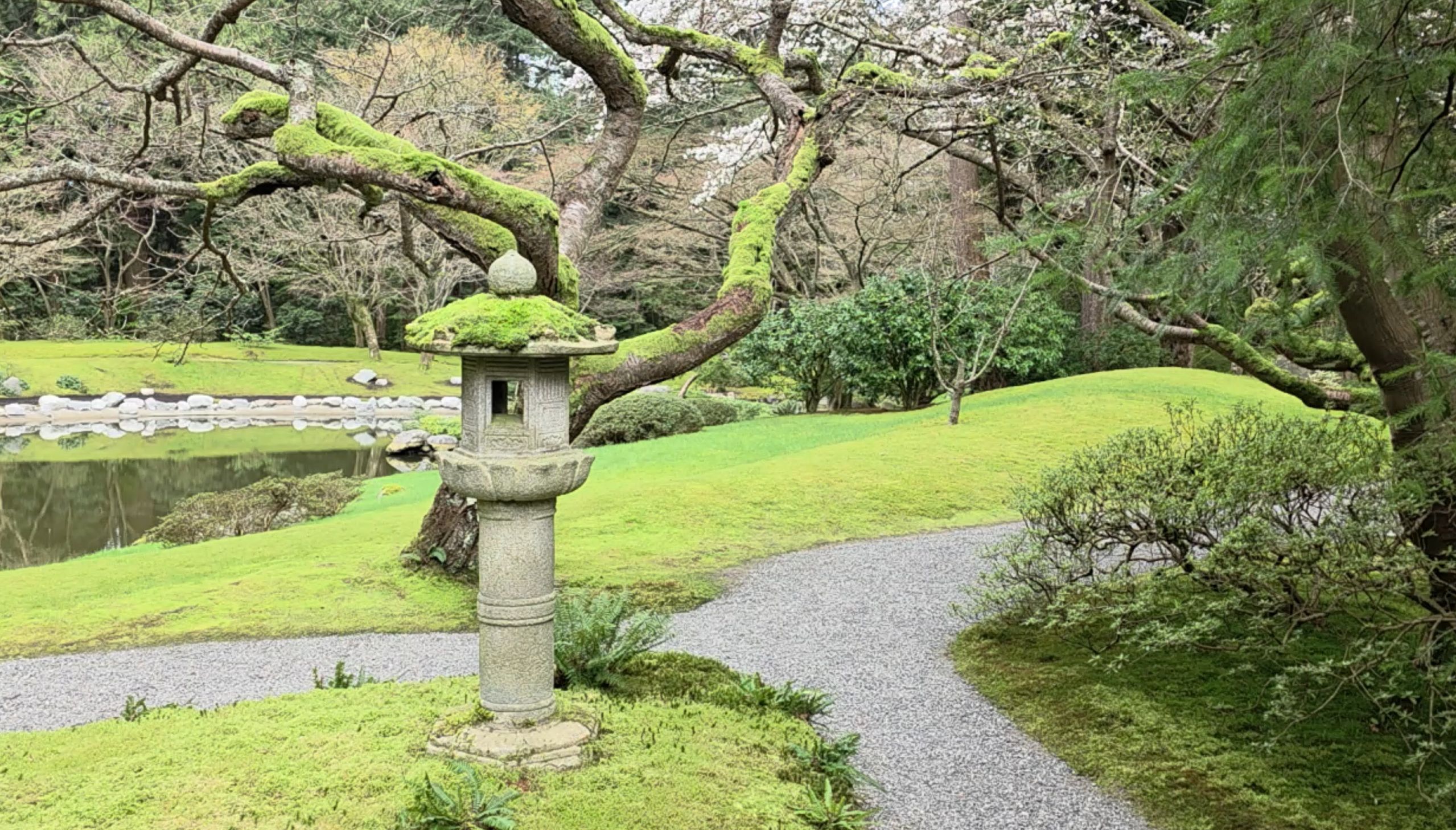
Nitobe is a quiet and peaceful place. It doesn’t demand attention. Whenever I visit, I feel a sense of care, peace, and timelessness. It is a place of intentional design and harmonize nature. Its design was based on ancient traditions but incorporated local materials. Every element exists because someone chose it – and continues to tend it.
Being there reminded me of something important:
Recovery is not a moment. It is a way of living that requires maintenance, redesign, and care. And if the conditions don’t change, no amount of reflection will hold.
Who This Conversation Is Really For
This is not a message for people who need more motivation.
It is for creative souls who are capable, intelligent, deeply responsible, and quietly, chronically exhausted.
People who blame themselves when creativity disappears – when the problem is actually the life structure they’re trying to create inside.
I’m not a therapist.
I’m a creative professional who burned out more than once, before realizing that recovery required redesigning my life – not just soothing myself inside it.
Understanding Burnout Isn’t the Same as Resolving It
Therapy helped me understand why I burned out.
Reflection gave me language.
Rest gave me temporary relief.
But burnout kept returning.
Why?
Because insight alone does not change conditions. I’ve learned that Burnout starts to resolve when:
– schedules change
– expectations shift
– boundaries are honoured
– and patterns are interrupted reliably enough to matter
I didn’t recover because I learned better watercolour techniques. I recovered because I stopped living in ways that made creativity impossible to sustain.
That required commitment – not motivation – commitment to Change.
The Three Changes That Actually Mattered for Me
Recovery didn’t happen all at once, and it didn’t happen perfectly. But it did require deliberate change in four areas that I grew to realize had to be non‑negotiable if change was going to stick.
1. Time – Claiming It Rather Than Waiting
I had to stop pretending creativity would fit in “someday.” Time did not magically appear. I had to claim it – gently, imperfectly, intentionally. That meant:
– setting boundaries around work
– renegotiating responsibilities
– noticing when I was giving my best energy away automatically
Sometimes it meant choosing my sketchbook over doom‑scrolling – not as discipline, but as care. Creativity could not survive as an afterthought.
2. Space – Reducing Friction Instead of Raising Standards
I had to stop waiting for ideal conditions. No perfect setup. No perfect energy. No perfect idea before beginning. Creativity after burnout does not respond to pressure or performance. It responds to safety.
That meant:
– a simple, inexpensive sketchbook
– portable tools
– spaces that welcomed unfinished work
Reducing friction was not lowering standards. It was lowering threat.
3. Patterns – The Hardest and Most Necessary Work
This was the most difficult change. I had to look honestly at patterns that had been with me for decades: – over‑responsibility
– chronic self‑pressure
– linking worth to productivity
– guilt for resting
– shame for mistakes
These were not flaws. They were survival strategies. But survival strategies don’t always make sustainable lives. Therapy helped me understand these patterns. Recovery came from responding differently to them – daily, imperfectly, consistently enough to matter.
That work doesn’t end. But it does get lighter.
4. Rest – The Most Misunderstood
Rest is often the most misunderstood part of burnout recovery. Not just sleep – but the right kinds of rest aligned with the type and degree of depletion.
Without restoration, even the most thoughtful redesign becomes exhausting to sustain. The nervous system never fully repairs. Change begins to feel heavy instead of supportive. Rest is what allows the body to stand down long enough for new habits to take root. It isn’t indulgence. It’s necessary maintenance.
Gentleness Without Change Is Not Enough
This is where honesty matters most:
Gentleness matters. Rest matters. Grace matters.
But…
Gentleness layered onto an unchanged life will not sustain recovery. You cannot keep the same schedules, the same self‑expectations, the same reflexive responses – and expect burnout to resolve.
Recovery is not about doing more. It is about doing things differently. This is not punishment. It is alignment.
Why Structure Saved My Creativity
I talk about structure not because I believe in hustle culture – but because structure saved my creativity.
Not rigid rules. Not over‑doing. But systems that:
– reduce decision fatigue
– protect energy
– and make space for what matters
Structure isn’t the enemy of creativity. Chaos is. Without structure, creativity is constantly negotiating for survival.
Redefining the North Star
For a long time, I believed my goal was “getting my creativity back.” Now I know that was too small. My real North Star is this:
✨ A life where creativity is sustainable – not something I lose and recover over and over again. ✨
That requires:
– honesty
– boundaries
– and the willingness to redesign parts of life, not just decorate around the edges
✨A Quiet Moment of Reflection
Before moving forward, pause. Not to fix. Not to decide. Just to notice.
✨Where might your current life be recreating burnout without your noticing?
✨What feels supportive right now – and what feels quietly depleting?
✨What one small change might help creativity feel safer this season?
Awareness is often the first real step toward change – and it can be approached with kindness.
Closing – Truth, Compassion, and Forward Motion
I’ll be honest – I’m still balancing a lot:
Full‑time design work.
Building Blueprint to Brushstrokes.
Making space for my own creative practice.
Supporting family as a member of the “Sandwiched” X-Generation.
Balance is not a destination. It is noticing imbalance earlier – and responding sooner.
If this message feels uncomfortable, that discomfort may be worth listening to. It may be your creative voice telling you that your current system is no longer working. Creativity does not need to be earned through exhaustion. It needs conditions where it is safe to stay.
Until next time – wishing you a grace‑filled day, and the courage to change what truly needs changing.
Jennet
Hashtags: #CreativeBurnout, #BurnoutRecovery, #CreativeRenewal, #SustainableCreativity, #CreativeLifeDesign,
#MidCareerCreatives, #EmotionalExhaustion, #ReturnToCreativity, #CreativeCoaching, #BlueprintToBrushstrokes
April 7, 2026
Companion Video
This post accompanies the YouTube video
“Why Creatives Burn Out – And How to Start Again (Gently)”,
available on the Blueprint to Brushstrokes channel.
👉 Watch here:
The video offers a calm, accessible introduction to creative burnout – what it is, why it happens, and how to begin again without pressure or self‑blame. This expanded essay creates more room for understanding the pattern beneath burnout, and for restoring a sense of agency and compassion as you find your way forward.
If Creating Feels Heavy, This Isn’t Failure
If creating feels heavy instead of nourishing right now, this isn’t laziness – and it isn’t failure. For many creatives, burnout arrives quietly. Not as a dramatic collapse, but as a growing sense of effort, distance, or dullness where joy and curiosity once lived.
You may still be capable. Still responsible. Still showing up. And yet, something feels off.
Creative burnout is not a sign that something is wrong with you. It is often a sign that something has been asked for too long without enough repair.
Burnout Is a Pattern – Not a Personal Flaw
One of the most important reframes in creative renewal is this:
✨Burnout is not a character issue. It’s a pattern. ✨
It tends to emerge when capable, caring creatives carry sustained emotional, cognitive, and creative load without sufficient nourishment or relief. Burnout often appears when:
– pressure accumulates without release
– responsibility expands without renegotiation
– and creativity is asked to function inside systems that no longer support it
Seen through this lens, burnout is not a collapse. It’s a protective response – the nervous system applying the brakes when something has become unsustainable. Nothing here is broken. Something here is asking to be listened to.
The Difference Between Productivity Burnout and Creative Burnout
Creative burnout is often misunderstood because it doesn’t behave like productivity burnout.
You may still meet deadlines. Still perform competently. Still function.
But creative burnout shows up as:
– emotional fatigue
– loss of resonance or meaning
– disconnection from intuition or play
– creative work feeling costly instead of alive
This is especially common for creative professionals, caregivers, and mid‑career creatives who have spent years creating for others, under evaluation, constraint, or urgency. When creativity is repeatedly extracted from without being replenished, the system adapts by pulling back. Not out of indifference – but out of self‑protection.
Why Forcing Doesn’t Work Anymore
When burnout appears, many creatives try to “fix” it through effort:
– stricter routines
– new challenges
– more discipline
But effort-based solutions often fail – not because you’re incapable, but because burnout changes how creativity wants to be met.
After burnout, creativity does not respond to force. It responds to safety. Attempts to push through often reinforce the very conditions that caused the shutdown in the first place. Starting again requires a different posture: not pushing forward, but listening inward.
Stress and Anxiety as Early Messengers
Burnout rarely arrives without warning. Long before collapse, the system often sends quieter signals:
– persistent stress that never quite resolves
– anxiety that lingers beneath the surface
– low‑grade dread
– irritability or fatigue that sleep doesn’t fix
I often think of stress and anxiety like the early signs of a cold. A scratchy throat. Subtle fatigue. Signals that rest and care are needed. If those signals are consistently ignored – overridden by responsibility, urgency, or self‑pressure – the body eventually has to speak louder.
Burnout is that louder signal.
Not punishment. Communication.
What’s Really Happening Beneath Creative Burnout
Creative burnout usually grows out of three overlapping conditions. Most creatives experience some combination of all three.
1. Pressure
Pressure can be internal or external – and the nervous system doesn’t distinguish between the two.
Internal pressure often looks like:
– perfectionism
– high self‑expectations
– tying worth to output or usefulness
External pressure may include:
– deadlines
– financial instability
– constant evaluation or comparison
Sustained pressure keeps the system in a state of vigilance. Creativity, which requires openness, begins to constrict.
2. Overwhelm
Overwhelm isn’t just about how much you’re doing. It’s about what your mind is carrying.
– Overthinking.
– Rehearsing conversations.
– Planning, worrying, scanning for risk.
Even when you sit down, the system doesn’t rest – because mentally, it’s still working. Creativity needs buffer margins: in schedules, yes – but also in inner space. When there’s no room for mental completion, the system never fully resets.
3. Disconnection
The third contributor is disconnection.
Disconnection from:
– meaning
– joy
– intuition
– the original why behind creating
This often happens quietly.
When creative work becomes another obligation…
When caring deeply isn’t met with reciprocity…
When the most vulnerable parts of creativity are repeatedly rushed or judged…
the system adapts. It pulls back. What once felt like passion begins to feel like depletion.
Why Rest Isn’t Just Sleep
Burnout is often paired with insufficient rest – not just a lack of sleep, but a lack of the kinds of rest that allow the system to reset. Many creatives say, “I rested, but I still don’t feel better.”
This doesn’t mean rest failed. It means the rest didn’t match the depletion.
Rest takes different forms:
– physical
– mental
– sensory
– emotional
– creative
– social
Without the right kind – and enough of it – burnout has nowhere to resolve. Rest is not indulgence. It is system maintenance.
Three Gentle Phases for Starting Again
Recovery rarely happens all at once. It tends to unfold in phases – phases that may overlap, repeat, or evolve over time.
✨Phase 1 – Repair
Repair is about stability, not output. This is the phase where safety comes before expression. Supportive practices might include:
– prioritizing sleep
– slower mornings
– gentle walks
– swatching colour
– sitting with materials without expectation
Nothing here needs to be productive. Nothing needs to be shared.
The question is simple: What helps my system settle right now?
✨Phase 2 – Return
Return means gentle, contained contact with creativity. Not “back to normal” – but back to relationship. This might look like:
– ten‑minute sessions
– one brush, one colour
– stopping before fatigue
Return is about rebuilding trust. Stopping while you still feel okay teaches the nervous system that creativity is no longer something it has to brace against.
✨Phase 3 – Rebuild
Rebuild is where capacity slowly returns – not through force, but through repetition and care. Supportive practices may include:
– simple rituals
– repeating familiar subjects
– measuring progress by presence rather than output
This is where creativity begins to feel like yours again. Not louder. More honest.
You’re Not Starting Over
You are not starting from zero. You are starting from:
✨experience
✨knowledge
✨lived understanding
Burnout does not erase your creativity. It reshapes how it wants to be met. Quieter does not mean lesser. Slower does not mean broken. Often, what emerges after burnout is not less meaningful – but more true.
A Gentle Invitation
If it feels supportive, take a moment to reflect:
✨What is my burnout trying to tell me right now?
✨Which phase am I truly in – repair, return, or rebuild?
There are no right answers. Only listening.
Creativity doesn’t need to be rescued. It needs care. Burnout is not the end of your creative life – it is often the beginning of a more sustainable relationship with it.
Until next time – wishing you rest, compassion, and the quiet trust that renewal is already underway.
Jennet
Hashtags: #creativeburnout, #burnoutrecovery, #creativeblock, #midcareercreatives, #gentlecreativity, #creativehealing, #artistmindset, #creativerenewal, #blueprinttobrushstrokes